
Your car comes back from the body shop with a clean front bumper and a fresh coat of paint. If the bumper had paint protection film before the repair, or if the damage convinced you to get it, you might want to book an installation for the following morning. First, make one call to the painter. The finish can look ready in the parking lot while still needing time before an adhesive film goes over it.
Ask the Body Shop for a Film-Ready Date
Tell the shop you plan to install paint protection film, often called PPF, and ask when the specific refinishing system they used can accept it. A general instruction about when you can wash the car answers a different question. Ask about adhesive-backed film specifically, and find out when the paint was actually applied. The pickup date may be several days later than the refinish date.
The paint system and the way the shop cured it matter. Keep the repair invoice and any written aftercare instructions. If the painter needs to consult the paint manufacturer before giving you a date, that’s a good time to gather photos and get an estimate for the film. You can plan both jobs without committing to an installation date prematurely.
Let the Installer Inspect the Refinished Panel
Bring the car in clean enough for the installer to see the finish clearly. Look over the bumper together in good light. Dust nibs, uneven texture, chipped edges, or areas the body shop still plans to polish can affect the final appearance. Clear film follows the surface underneath, and a small imperfection can become easier to spot once the gloss is uniform around it.
Say which panels were refinished, even if the repair blended into a fender that looks original. If paintwork or polishing is still scheduled, settle that first with the body shop. Then the installer can assess the finished surfaces together and work out where the film should stop.
Have a bumper that was recently repainted? Share your repair date and a few photos with Tint City and Wraps so we can help you plan your PPF installation.
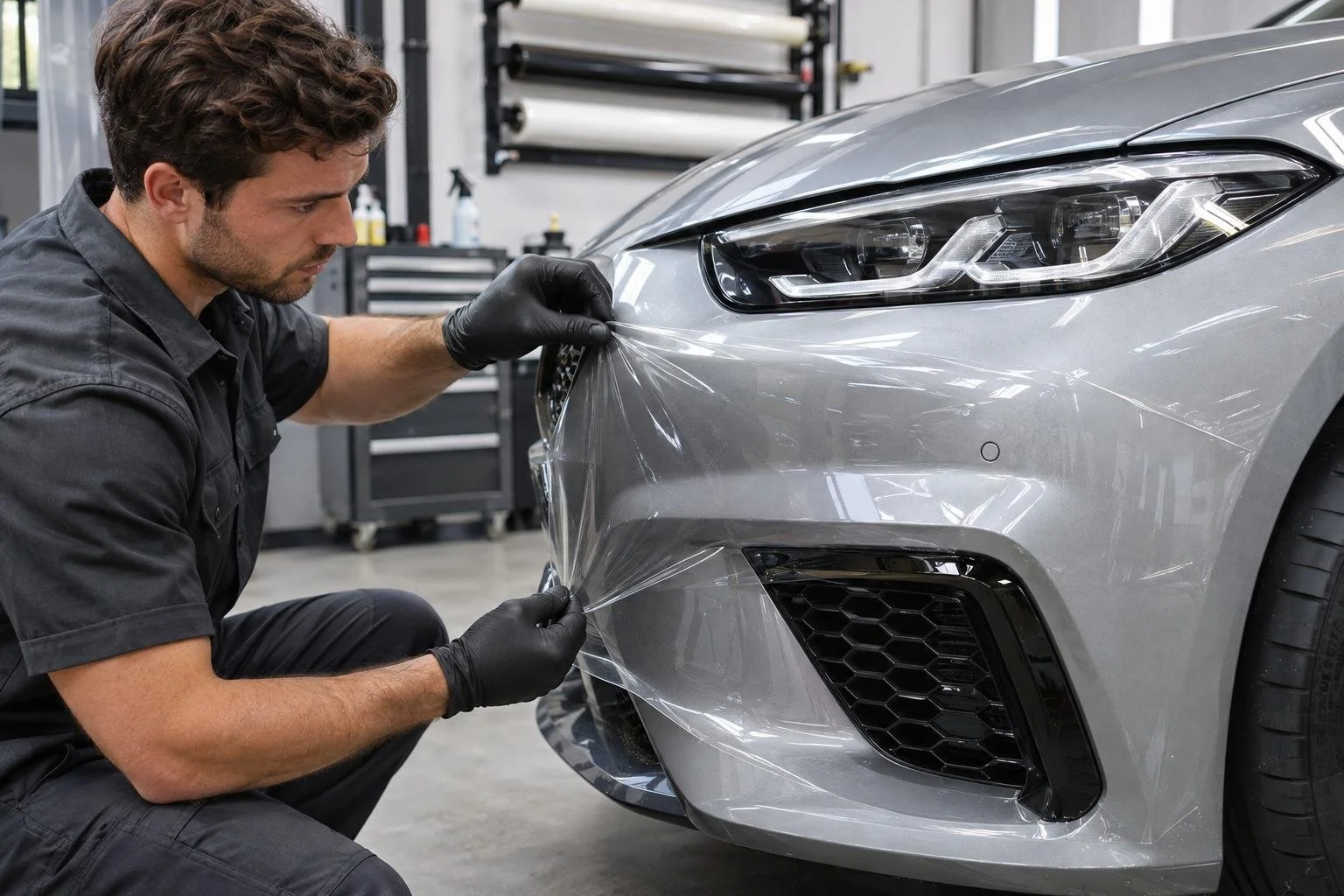
Decide Whether to Replace One Piece or Several
If the hood and fenders already wear PPF, the bumper may be the only panel that needs new film. Ask the installer to inspect the neighboring pieces and identify the original film if possible. Bring any previous installation invoice that names the brand, product, and finish. It’s easier to discuss a match when you know what is already on the car.
Check the boundary between the bumper and neighboring panels in daylight. Paint color, surface texture, and the finish of older film can all change how adjacent panels look. If the bumper had a separate film piece around a lower intake or a painted trim insert, confirm those areas on the quote. Photos taken before the repair can help reconstruct the coverage you liked.
Keep the Paint and Film Instructions Together
While you’re waiting, follow the painter’s care directions and ask before using wax, sealant, or other products on the repaired area. After PPF goes on, follow the film installer’s instructions for the first wash and routine care. Save the two sets of instructions with your invoices so you can reference them if the panel needs future work.
The cleanest handoff is a specific film-ready date from the painter, a final inspection of the bumper, and a written list of the areas you’re protecting. That gives both shops the information they need to do their part.
Ready to protect your repaired bumper? Request a PPF quote from Tint City and Wraps in Fort Lauderdale.
